Hard landscaping in Kensington
If you are planning to improve an outdoor space in one of London’s most distinctive neighbourhoods, hard landscaping in Kensington can transform the way your property looks, feels, and functions. Whether you have a compact private garden, a shared courtyard, a townhouse frontage, or a commercial outdoor area that needs to make the right impression, the right hard landscaping work can create structure, durability, and a more practical layout for everyday use.
Kensington properties often come with their own challenges and opportunities. Many homes here have elegant period details, limited access, basement levels, side returns, mews courtyards, or tucked-away rear gardens. Commercial premises may need smart paving, low-maintenance surfaces, improved access routes, or attractive entrance areas that stand up to regular foot traffic. That is why a local, experienced approach matters. A well-planned project should suit the property style, respect the neighbourhood setting, and work around the realities of London access, deliveries, and scheduling.
From paving and retaining features to steps, edging, raised planters, boundaries, and complete garden reworks, hard landscaping provides the framework for a space that is built to last. If you are looking for a practical, attractive finish that complements Kensington homes and businesses, this page explains what is involved, what to consider, and how to get started. Contact us today to discuss your ideas and request a free quote for your project.
Why hard landscaping matters for Kensington properties

In a high-value residential area like Kensington, outdoor space is rarely an afterthought. Even a small front garden, shared entrance, or courtyard can add major value in terms of appearance and usability. Hard landscaping gives that space form and purpose. It can define circulation routes, create usable seating areas, manage level changes, and support planting so the whole space works together.
Unlike soft landscaping alone, which focuses on planting and turf, hard landscaping uses structural materials and built features. This may include stone paving, brickwork, timber or composite structures, drainage solutions, decorative gravel, steps, walling, coping, and borders. The result is a space that is easier to maintain and more resilient through the year, especially in areas with frequent foot traffic or limited room for extensive planting.
Kensington hard landscaping is often about balance: durability on one hand, elegance on the other. Materials and layouts should match the property’s character, whether that is a grand Victorian terrace, a mansion block courtyard, a modern apartment terrace, or a commercial frontage near busy streets and mixed-use buildings. The right design choices help outdoor areas feel finished rather than improvised.
Common hard landscaping services we provide

Every project is different, but most local enquiries begin with a few core services. A good hard landscaping team should be able to shape an outdoor area from the ground up or improve an existing layout that no longer works.
Typical services include:
- Patio and paving installation
- Natural stone and porcelain paving
- Driveway edging and entrance surfacing
- Garden paths and access routes
- Brick, stone, and rendered retaining walls
- Steps, risers, and changes in level
- Raised beds and planters
- Boundary features and decorative walls
- Gravel areas and drainage-friendly surfaces
- Hardstanding areas for bins, bikes, or utility access
For many Kensington homes, the most useful work is not the biggest. A narrow side return may benefit from a clean, level path and discreet drainage. A mews property might need smart paving and a boundary wall that feels secure without looking heavy. A restaurant, office, or hospitality venue may need a durable entrance zone that stays neat under constant use. The value lies in making the space more usable, more attractive, and easier to maintain.
When planning hard landscaping, it is worth thinking about how the space will be used throughout the day and across the seasons. Will it need to handle children, pets, visitors, deliveries, or staff movement? Does it need somewhere to sit, store items, or transition between inside and outside? The answers help shape a better design and a longer-lasting result.
What is included in a hard landscaping project?

A well-managed project should cover much more than the visible finish. The groundwork beneath patios, paths, and retaining structures is just as important as the top layer. Without proper preparation, even attractive materials can shift, crack, or drain poorly over time.
Most hard landscaping work includes some combination of the following stages:
- Initial consultation and site discussion – understanding the space, your priorities, and any access limitations.
- Site assessment – checking ground conditions, levels, existing features, drainage, and boundaries.
- Design and material planning – selecting surfaces, finishes, and layout details that suit the property.
- Ground preparation – excavation, removal of old materials, sub-base installation, and levelling.
- Structural construction – laying paving, building walls, installing steps, edging, or planters.
- Drainage and finishing – ensuring water runs correctly and the final appearance is clean and durable.
In Kensington, logistics matter too. Access for tools and materials can be limited in some streets, and parking or loading arrangements often need careful planning. A local team is more likely to understand how to work efficiently around these challenges, reducing disruption and keeping the project moving.
Hard landscaping in Kensington should feel tailored to both the property and the practical realities of the area. That includes respecting neighbours, planning deliveries thoughtfully, and ensuring work is carried out with minimal inconvenience where possible.
Popular materials for Kensington outdoor spaces
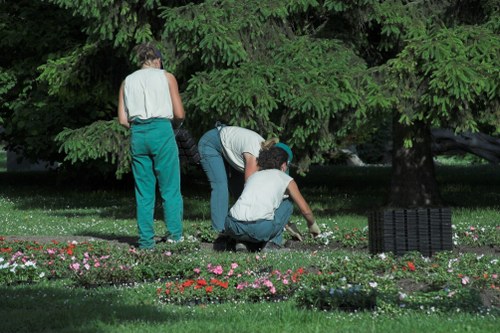
Material choice has a huge impact on how the finished space looks and performs. Kensington properties often benefit from materials that feel timeless, refined, and appropriate to the surroundings. At the same time, they should be robust enough for regular use and suitable for London conditions.
Natural stone
Natural stone remains a popular option for patios, paths, and entrance areas because of its character and durability. It can look particularly effective around period homes and traditional garden settings. Stone paving can offer a more classic appearance, with subtle variation that suits older properties and established streets.
Porcelain paving
Porcelain is often chosen where a clean, modern look is desired. It is typically low-maintenance, available in a wide range of finishes, and works well in contemporary courtyards or neat entertaining spaces. For busy households and commercial settings, its easy-clean qualities can be a major advantage.
Brick and clay detailing
Brick edging, low walls, and paving details can complement the architecture commonly found in Kensington. They help tie an outdoor scheme into the surrounding buildings, especially where red brick facades, mews structures, or historic boundary lines are part of the visual context.
Gravel and decorative aggregates
Gravel can be a practical and attractive choice for side areas, borders, or informal spaces. It may help with drainage and add texture to a layout. With the right edging and base preparation, it can look neat and perform well in smaller areas.
Timber and composite elements
Although hard landscaping is primarily about structural features, timber or composite materials can play a useful role in raised beds, screens, seating, or edging. These elements can soften the appearance of paving and walling, especially where a more welcoming feel is wanted.
Choosing the right materials is not just about taste. It is also about maintenance, drainage, longevity, and how the space will be used. A local team can help you compare options based on the type of property, the level of use, and the style you want to achieve.
Local property types and the challenges they bring
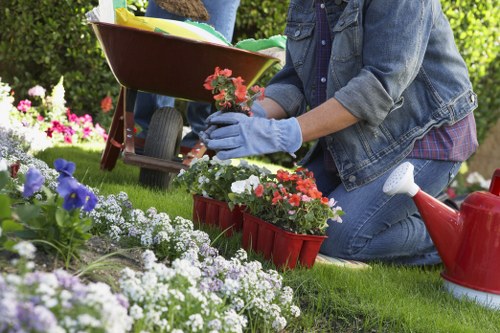
Kensington includes a wide range of property types, and that diversity affects how outdoor work should be planned. A project that works well in one setting may not suit another.
Townhouses and period terraces often require careful attention to proportions and materials. Front paths, steps, and low walls should feel in keeping with the architecture rather than overpowering it. Drainage can also be important where age-related levels and existing structures need to be respected.
Basement properties and lower-level gardens may involve more attention to water management, retaining features, and safe access. In these settings, hard landscaping may need to support better drainage and create practical transitions between different levels.
Mews homes and compact rear spaces usually call for efficient use of every square metre. Clean paving, good boundaries, and clever built-in features can make the area far more usable without feeling crowded.
Apartment courtyards and shared spaces need robust finishes that can stand up to regular use while still looking smart. For landlords, managing agents, and residents’ associations, hard landscaping can make common areas easier to maintain and better presented.
Commercial premises have their own priorities. A shopfront, office entry, hospitality terrace, or service yard may need a strong, attractive surface that handles footfall, waste movement, deliveries, and accessibility needs.
These are exactly the kinds of details that make local experience valuable. A team familiar with Kensington can plan around restricted access, busy streets, shared entrances, loading challenges, and the need for tidy, considerate site management.
Why choose a local company for hard landscaping in Kensington?
Working with a local contractor brings practical advantages that matter on real projects, not just on paper. For customers in Kensington, those advantages often show up in the planning, the build, and the finished result.
Better understanding of local conditions
Local teams are more likely to understand the demands of inner London access, parking restrictions, narrow entrances, and shared courtyards. That understanding helps avoid delays and unnecessary disruption.
More suitable design choices
Kensington properties often have a distinct architectural character. A local hard landscaping company is more likely to recommend materials, colours, and layout features that suit the setting. That means the space feels integrated rather than imposed.
Efficient project handling
Time matters, especially where access is limited. A local team can usually plan visits, deliveries, and site work more efficiently, which helps the project run smoothly.
Helpful advice based on similar properties
Experience with nearby homes and businesses means a contractor can anticipate common issues such as level changes, drainage needs, or awkward boundaries. That can save time during the build and improve the final result.
When you are choosing a service provider, you want someone who understands that outdoor work is part design, part construction, and part problem-solving. In Kensington, that local knowledge can make a real difference.
How the service works
Most customers want to know what the process looks like before they commit. A clear, well-organised approach helps you feel confident and ensures the project is shaped around your needs.
1. Discuss your aims
Start by explaining what you want the space to do. Some customers need a family-friendly garden. Others want an elegant courtyard for entertaining. Some want a practical access route or a low-maintenance frontage. The clearer the brief, the easier it is to plan the right solution.
2. Assess the site
The next step is to look at the space itself. This includes ground conditions, current features, drainage, slopes, access, and any obstacles. In Kensington, this stage often reveals issues that are easy to miss at first glance, such as tight entry points or hidden level changes.
3. Choose materials and layout
Once the space has been assessed, the right materials and arrangement can be discussed. The aim is to combine appearance, performance, and practicality. The best option is not always the most decorative one; it is the one that suits the property and the way you use it.
4. Prepare and build
Preparation is crucial. Proper excavation, sub-base work, support structures, and drainage planning all contribute to a durable finish. After that comes the visible construction: paving, walling, steps, edging, and finishing details.
5. Final checks and handover
Once the work is complete, the final result should be checked carefully. That includes surface finishes, joints, falls, drainage flow, and overall presentation. The aim is a space that looks good and performs well from day one.
Book your service now if you are ready to move ahead, or request a free quote if you would like to compare options for your property.
Preparation checklist for customers
A little preparation can help your project start smoothly and avoid unnecessary delays. Before work begins, it helps to think about the following points:
- Identify which parts of the space you want to keep, replace, or improve
- Make note of any existing drainage problems, damp patches, or standing water
- Consider how the area will be used day to day
- Think about privacy, screening, and boundary needs
- Decide whether you want a traditional, modern, or mixed finish
- Check access for tradespeople, especially in narrow streets or shared spaces
- Remove fragile items, pots, furniture, or decorations from the work area where possible
- Discuss any building management or neighbour coordination required in advance
For Kensington residents, it is also worth thinking about logistics such as loading access, permit constraints, and how materials will be brought to the property. If your home or business is in a busy street, courtyard, or mews, a local contractor can help plan around those constraints.
Clear preparation does not need to be complicated. It simply means that the work can begin with fewer unknowns and a better understanding of the finished goal. That is especially helpful if you want a smooth process with minimal disruption.
Pricing factors to consider
Customers often want to know what affects the cost of hard landscaping. While exact prices depend on the scope of the work, there are several common factors that influence a project.
Project size and complexity
A small pathway with a simple layout will usually involve less work than a full garden redesign with retaining walls, multiple levels, and drainage improvements. Complexity matters as much as size.
Material selection
Different materials have different supply, preparation, and installation requirements. Natural stone, porcelain, brick, and bespoke features all vary in their labour and material demands.
Ground conditions
Existing conditions can affect the amount of preparation needed. Uneven ground, poor drainage, old structures, or tree roots may require additional work before the new surface can go in.
Access and site logistics
In Kensington, access can be a significant factor. If materials need to be carried through a property, delivered at restricted times, or brought into a courtyard with limited entry, the job may take more planning.
Drainage and support work
Good drainage and proper foundations are essential for long-term performance. If these elements need extra work, they become part of the overall project scope.
The best way to understand likely costs is to request a tailored quote based on your actual space. That allows the job to be assessed properly rather than estimated from a distance. If you are comparing options, ask what is included in the quotation so you can make a fair comparison.
Benefits of investing in hard landscaping
A well-designed outdoor space does more than improve appearances. It can make daily life easier and add value in several practical ways.
- Improved usability – paths, patios, and steps make the space easier to move through and enjoy
- Better drainage – the right structure can help reduce puddling and surface water issues
- Lower maintenance – hard surfaces and strong edging can reduce ongoing upkeep
- Enhanced appearance – a finished outdoor area creates a better first impression
- Long-term durability – quality construction helps the space hold up over time
- Clearer layout – built features define zones for walking, seating, planting, or storage
In Kensington, these benefits matter because space is often at a premium. A well-executed hard landscaping project can turn an awkward or underused outdoor area into something genuinely practical. That might mean a sociable terrace, a calmer courtyard, a more elegant frontage, or a safer access route.
Hard landscaping in Kensington is not just about surfaces; it is about making the outdoor space more useful for the people who live, work, or welcome guests there.
Areas covered around Kensington
A local hard landscaping service in Kensington often supports surrounding neighbourhoods and nearby districts too. Depending on the job, this may include nearby parts of West London such as South Kensington, Earl’s Court, Notting Hill, Chelsea, Holland Park, Bayswater, Knightsbridge, and parts of Hammersmith or West Brompton where access and project type are suitable.
These areas share some common features: a mix of older buildings and newer developments, limited outdoor space in many properties, shared access routes, and a strong need for careful, tidy workmanship. That makes a local service particularly useful, because the same practical issues often appear across the area.
If your property sits close to busy streets, communal entrances, or narrow residential lanes, it helps to choose a contractor who is used to working in and around inner London properties. That can make the planning simpler and the site management more efficient.
Frequently asked questions
Can hard landscaping work in a small Kensington garden?
Yes. In fact, many Kensington properties have relatively compact outdoor spaces, and these can benefit greatly from a thoughtful hard landscaping layout. Even a small area can feel larger and more functional with the right paving, edging, steps, and built-in features.
Do I need to replace everything at once?
Not always. Some customers choose to improve the space in stages, especially if certain features can be retained. A site assessment can help decide whether partial updates or a full redesign makes more sense.
What if my property has difficult access?
That is common in Kensington, especially for mews homes, basements, courtyards, and properties with restricted entry. A local team should assess access early so the project can be planned around it.
Can hard landscaping help with drainage issues?
Yes, in many cases. Proper groundwork, falls, edging, and drainage features can improve how water moves across the surface. If the area has more serious water issues, this should be addressed as part of the planning stage.
How do I choose the right materials?
Think about the property style, how much use the area gets, how much maintenance you want to do, and the appearance you prefer. The right choice should suit both the look of the building and the daily demands of the space.
Is hard landscaping suitable for commercial premises?
Absolutely. Many businesses in Kensington benefit from durable paving, entrance features, and low-maintenance surfaces that hold up well under regular use while looking smart and welcoming.
When to get started
If your outdoor space is not working as well as it should, it may be time to look at structural improvements. Cracked paving, awkward levels, poor drainage, tired boundaries, or a layout that no longer suits your routine are all good reasons to explore hard landscaping work.
For some customers, the goal is to create a refined entertaining area. For others, it is about replacing worn surfaces or improving access. Many Kensington properties need a mix of both. The right solution should feel tailored, durable, and appropriate to the building and the street around it.
Whether you are planning a small update or a larger transformation, speaking to a local team early can help clarify the options and avoid costly mistakes. You will get a better idea of materials, timings, preparation needs, and what is realistic for the space you have.
Contact us today to discuss your project, request a free quote, and take the first step toward a more practical and attractive outdoor area. If you are ready to improve your property, book your service now.
Final thoughts
Good outdoor spaces do not happen by accident. They are planned carefully, built properly, and shaped around the way people actually use them. That is especially true in Kensington, where space can be limited, access may be tricky, and the finish needs to suit elegant surroundings as well as everyday life.
From patios and paths to retaining features, steps, edging, and entrance areas, Kensington hard landscaping can improve both the appearance and function of a property. Whether you are a homeowner, landlord, managing agent, or business owner, investing in solid groundwork and thoughtful design is one of the best ways to make an outdoor area more useful for the long term.
If you would like to explore what is possible for your property, get in touch to discuss your plans. A local approach, careful preparation, and the right materials can make a real difference to the result.